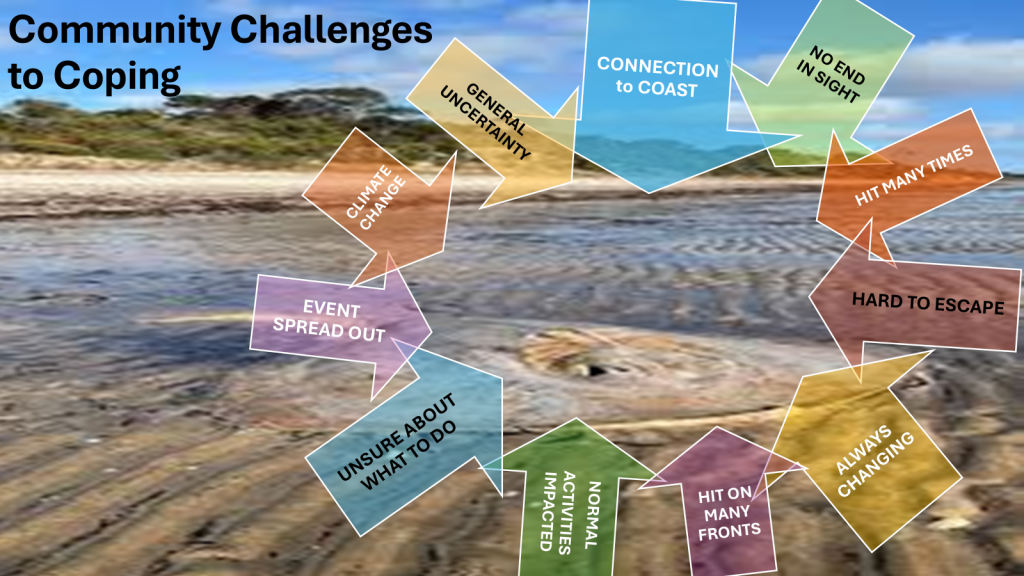
Many people in the community are living through financial, practical, health, cultural and lifestyle difficulties.
While people are being impacted in very different ways, and each of us will cope differently, we are generally highly connected to the coast as a community – though our livelihoods and lifestyles.
On top of this, there is no end in sight to the algal bloom, and there’s a lot of uncertainty about how the algal bloom will respond and change over time, as well as what the health impacts are.
There are also no easy or quick fix solutions to this unfolding crisis, which can leave some feeling quite helpless and even hopeless as to what to do personally, or what we should do as a community and society.
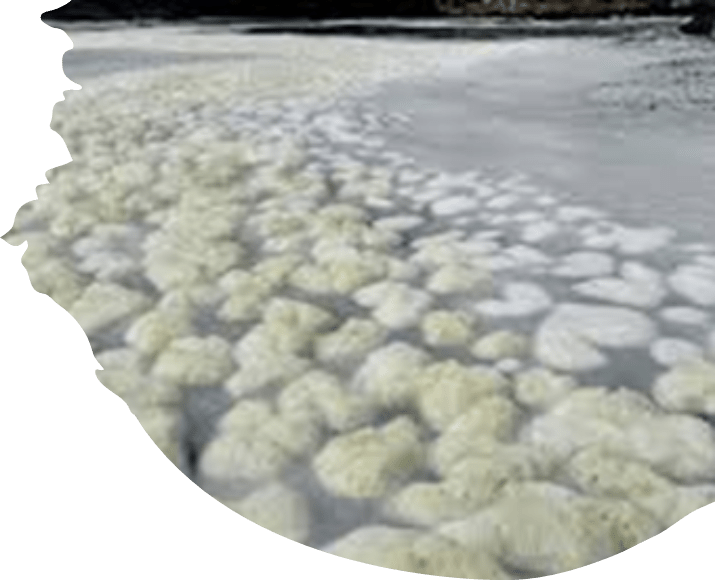
And, many of us are being repeatedly exposed to a range of distressing scenes and other difficulties, and this may go on for quite a long period of time.
Others feel confused by health and other beach, fishing and tourism advice.
What’s more, for many, the algal bloom situation can bring the issue of climate-change to the front of people’s concerns, including the general uncertainty about the future.
With all of these factors at play, it’s totally normal to feel deep sadness and loss, as well as fear, anger, mistrust, and a general sense of overwhelm or stress.
Normal and Common Reactions
Many other strong and mixed emotions are also common, valid and understandable at this time.
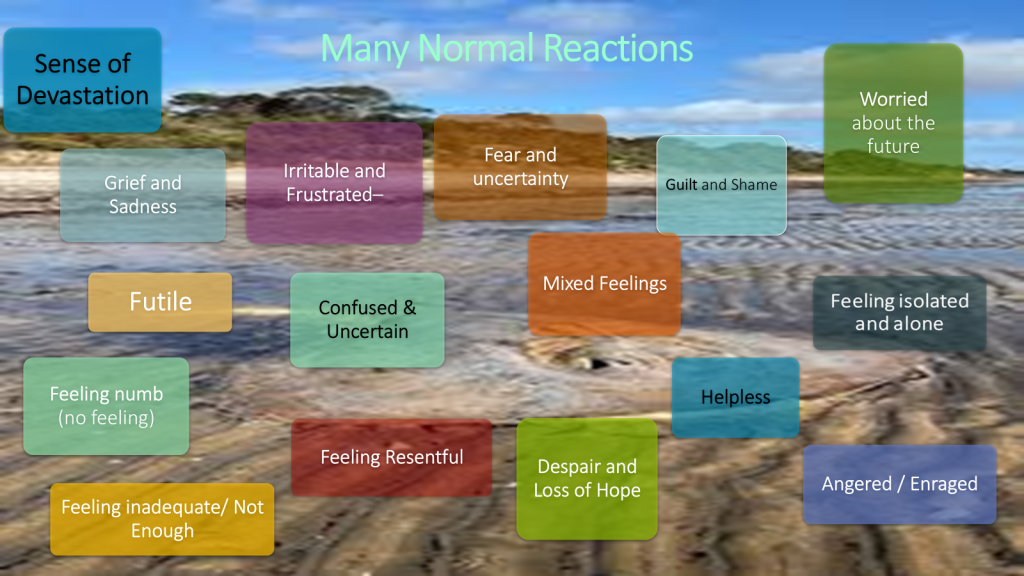
It is also normal to feel a whole host of contradictory emotions. For example, there may be some of us experiencing some positive aspects, such as more curiosity about the science or a ‘bitter sweet’ connection to the beauty of marine life, but also feeling great sadness and frustration at the same time.
The impacts of the bloom are very different for different people, and the feelings, experiences and personal reactions to the algal bloom will also be different for everyone.
It is important to make space for these emotions, within ourselves and when considering others.
Perhaps taking extra time to ourselves, or sharing our concerns with trusted others.
Unique Challenges to Validating Our Algal Emotions
Emotions can change over time. For example, there are people in the community who reported feeling strong waves of sadness, shock and frustration early on, but now these feelings have changed to “low grade” irritability and a kind of “background” sadness and/or loss of energy and interest.
Some may have trouble putting words to these ‘back-ground’ types of feelings and physical sensations, but have a gnawing sense that something ‘just isn’t right’.
Many may also find it easy to question whether their emotions are valid, when it’s common to encounter other people (South Australians or interstate residents) who know very little about the algal bloom and its impacts.
In this way, we could say, our emotional experiences are wide spread, but not evenly spread.
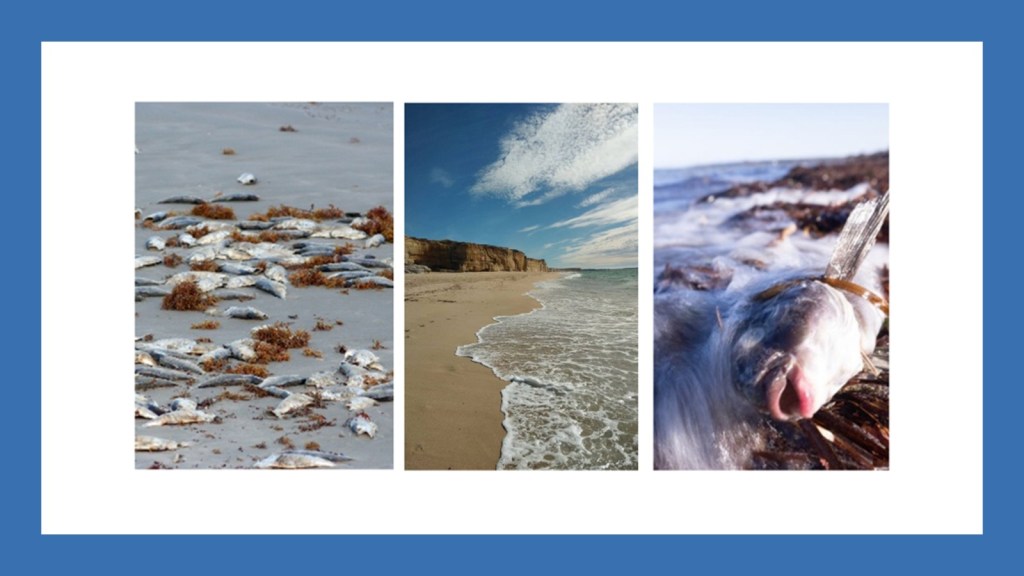
It can also be easy to question whether we are over-reacting when one day the beach looks (and even smells) fine, and then the next it doesn’t. One day there can be no visible or health-related signs, and, on the surface, it’s almost as though everything has gone back to normal. But then, when the foam and dead fish events return, the emotional toll of it all can hit again.
Physiological Signs of Stress and Distress
It can be ‘healthier’ to acknowledge these feelings, even putting words to them, as well as allowing ourselves to ‘feel these feelings’ – noticing the passing sensations in our bodies – without judging them or making them wrong or right.
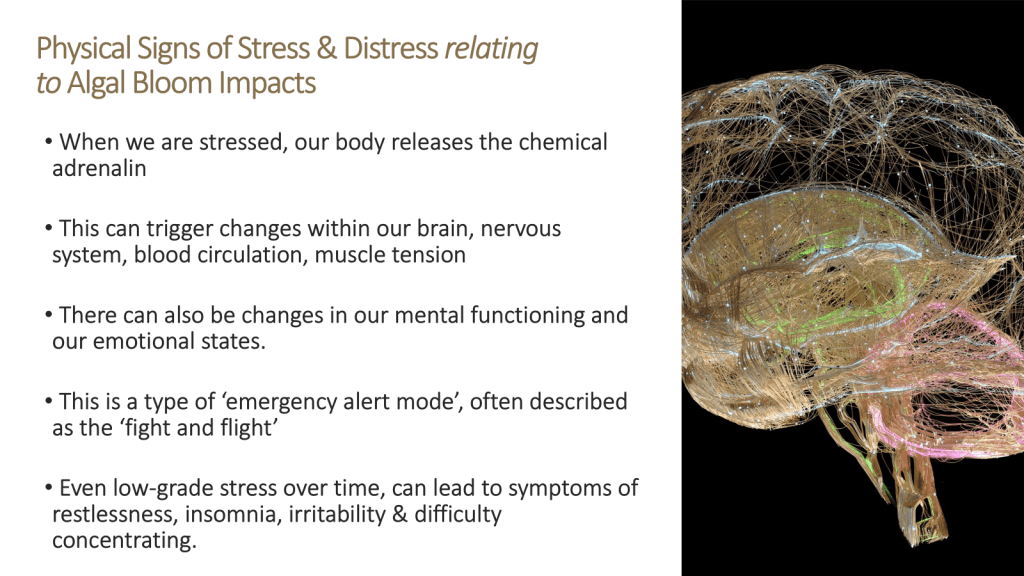
In this way, we can start to feel less ‘weighed down’ or ‘pressured’. As, stress left unchecked can start to impact our biological functioning, including our concentration, sleep, energy, appetite and interest in things, and, eventually, even our ability to get on with daily tasks and have peaceful relationships.
Often a good place to start is to make some quiet time and space, away from distractions, allowing selves to notice sensations and reactions in our body.
Read more about handling emotions during the bloom on the Emotion Focused Coping and the Eco-grief and Climate Distress pages.
Possible Community-Level Wellbeing Impacts
There are good reasons to to do some planning and experimenting about how you might manage any algal bloom challenges you are experiencing, as well as the stress and emotional toll that may come with these challenges.
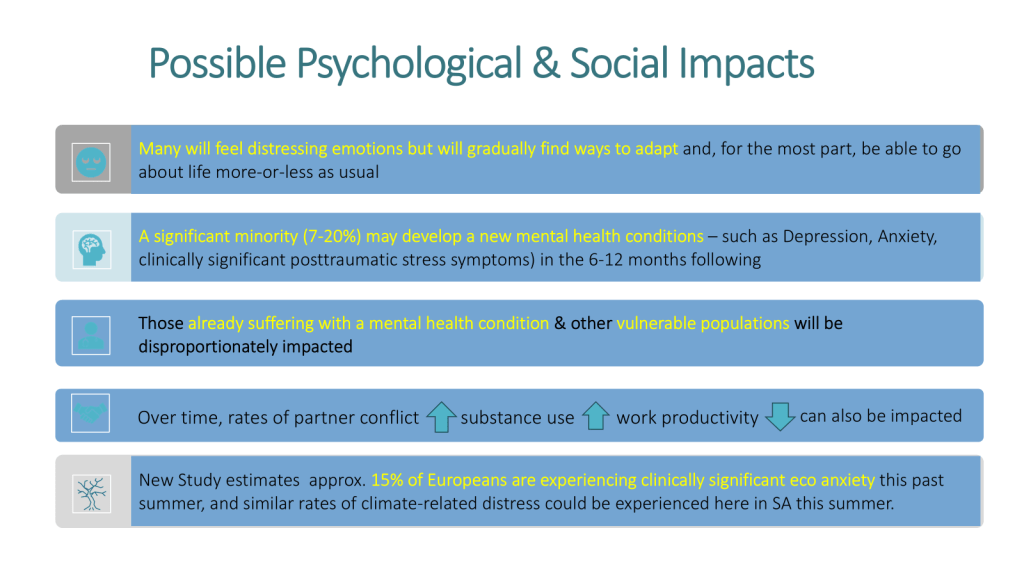
Research suggests, that at a community level, while many people will eventually find ways to adapt and cope, there could also be rises in the rates of people experiencing significant distress and other issues, such as increased conflict and substance use, as a result of the effects of the bloom.
This may be especially true for those who already experience mental health, physical health and other social difficulties.
So it is a good time to try to find a few extra ways of coping, including seeking extra support through your normal avenues, or through some of the avenues suggested here: Further Support: When and Where.
COLLECTIVE GRIEF AND TRUAMA
Because the algal bloom crisis is so wide spread, impacting so many people, in so many ways, over a long period of time, we can think of it as a ‘collective’ event.
We may personally be experiencing multiple losses, as well as knowing many others, who are also experiencing multiple challenges and losses.
We may know other people who are more indirectly affected, through personal connection to those more directly impacted, or by experiencing a loss through their knowledge about what’s happening along the coast.
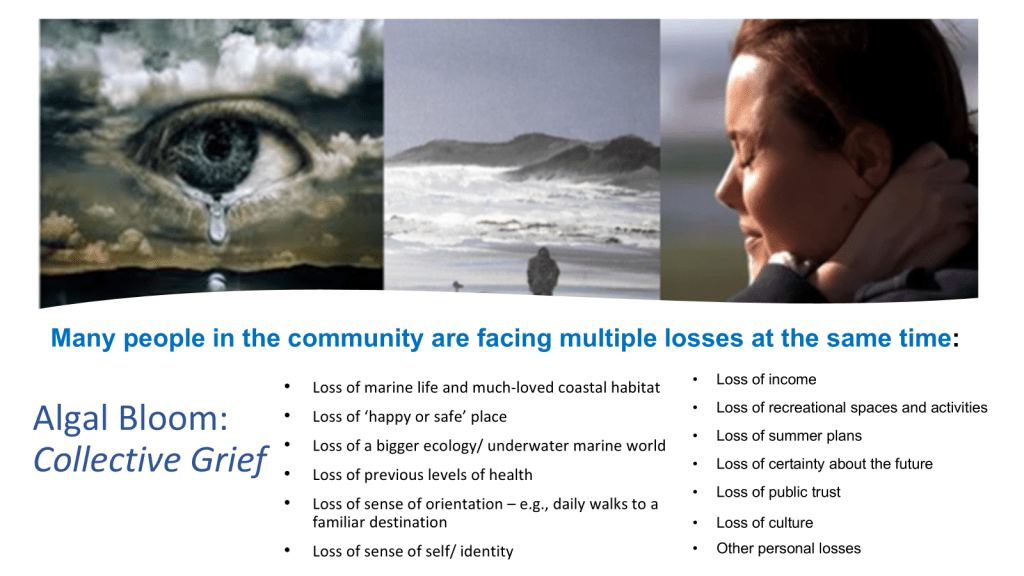
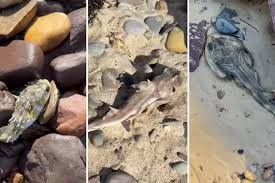
There may even be elements of collective trauma, because of the shocking nature of what many of us are experiencing. Many are repeatedly witnessing scenes of death, harm and even horror.
Because of this, it is not uncommon for people to have times of feeling very overwhelmed and even numb.
Perhaps, at times, this could be experienced as sense of being ‘frozen or detached’ , where we find it difficult to think and feel.

At these times, we may experience heightened anxiety – and noticing restricted breathing, a fast-beating heart or racing thinking – but also, feel temporarily ‘frozen’ or overwhelmed for action and decision making.
It can be helpful with this type of experience, to focus on breathing (short breaths in, long breaths out), giving ourselves more rest, as well as on trying to complete small achievable goals (such as household or work tasks, or practical things for other) and sticking to well-known routines.
If we are experiencing symptoms like this, we should be gentle with ourselves and seek medical assistance if they do not resolve fairly quickly.
When things Don’t Seem Right
Even when scene of ‘high horror’, such as mass fish kills are not present, there may be many things in our environment, with our health and in our community that don’t feel back to ‘normal’.

Many people have been left wondering whether some things will be altered for a long time to come, or even permanently.
Eco-Emotions
These feelings and experiences about the environment and climate at large, can be quite varied and complex. We can call these Eco-Emotions.
Some people have been reporting fear about the future, a sense of helplessness relating to the future of the environment, and frustration or disappointment at the lack of social action on climate change.
Eco Emotions can be:
- •A blend of emotions (e.g. grief and fear together)
- •Connect to the past, present and future (e.g., longing for what was, imagining the future)
- •Relate to our sense of self and connection to nature at the same time (e.g., awareness of how we feel as we also feel the suffering of dying nature)
- •Be hard to define
- •Be experienced by differently by different cultural groups
Here are a few of the ways people can experience their feelings about climate change.
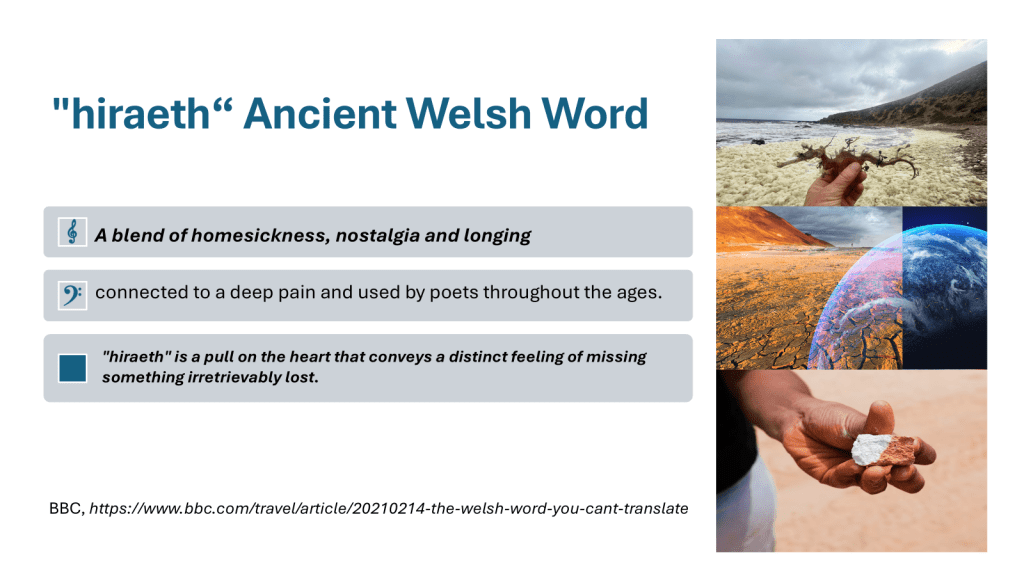
Some people have been referring to an ancient Welsh word, ‘hir’ ‘eth’, to describe both the sadness and grief about the effects of the algal bloom, including a longing for things to be ‘as they were’ and for all to be well with nature.
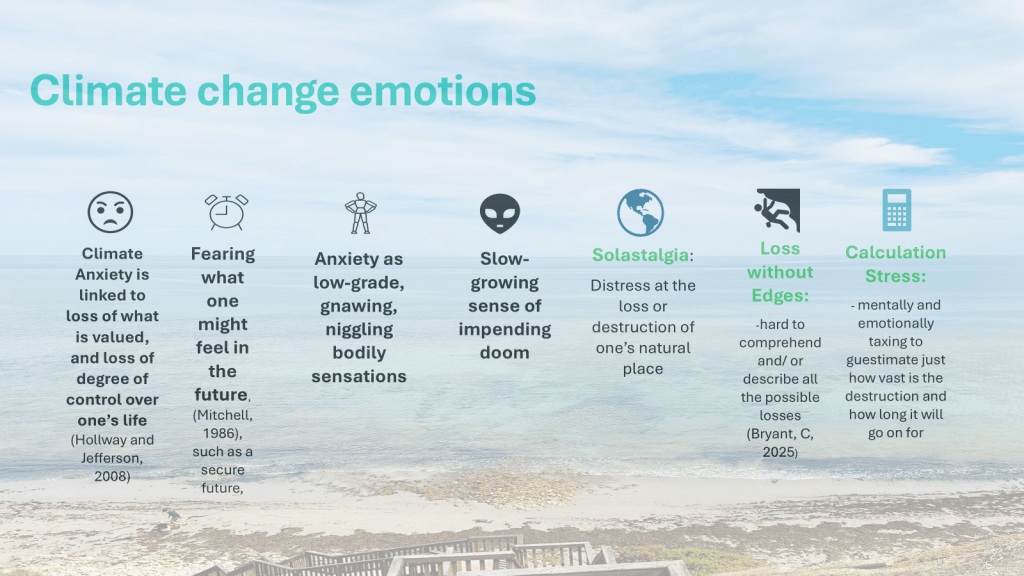
Solastalgia is another term being used to describe the distress at the sense of loss, dying and destruction of the place or environment which we are strongly connected to.
This has been described as a sense of homesickness for a place we haven’t left.
Another term that can be particularly useful when thinking about the current algal bloom crisis, is ‘loss without edges‘. That is, a sense that we are grieving for something that we don’t know the extent of. It is not possible currently to quantify all the marine life, or how long this crisis will go on for.
Sometimes, this sense of an unknown quantity of loss (in the past, present and future) can result in a heavy mental burden, trying to estimate and predict all of this loss and destruction. This could be referred to as ‘climate calculation stress‘.
‘Light in the Dark’
In spite of all of the challenges to the community and all the difficult feelings at this time, there is an invitation to consider some of the potential positive emotions and experiences.
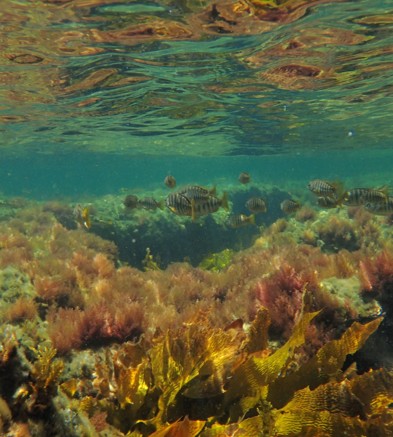
Here are a few of the positive experiences people have been noticing (amongst all the undeniable hardship).

People have been describing that they are noticing some positive community projects – involving constructive solutions to the crisis, as well as artistic expression of events. Others, describe finding more curiosity and wonder at the natural world, and more gratitude for nature in general.
MANAGING EXPOSURE TO THE ALGAL BLOOM: THINGS TO CONSIDER
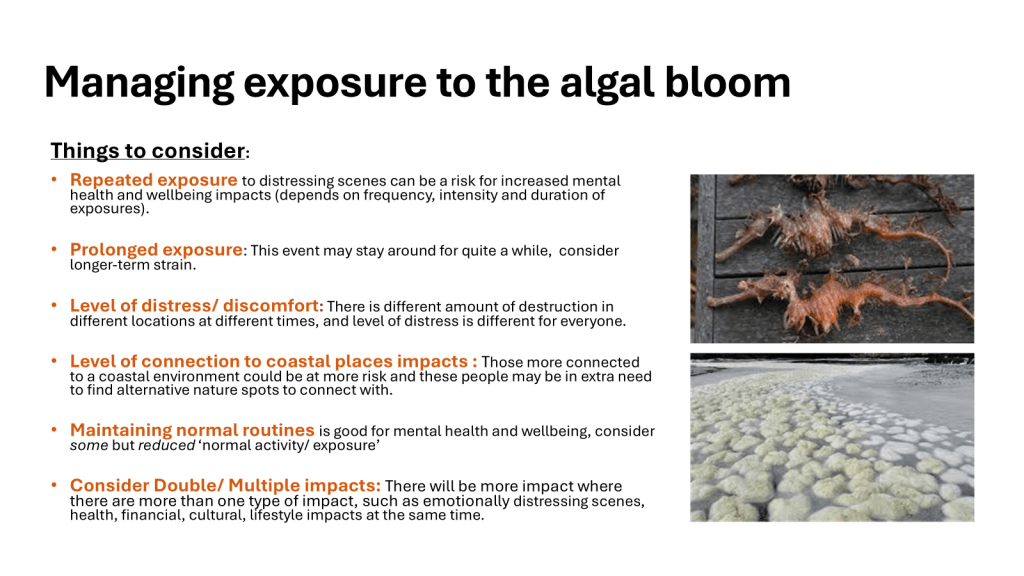
When thinking about the psychological toll of the bloom, there are a few things to consider when it comes to our exposure to the algal bloom’s destruction and coastal impacts. In particular, being repeatedly exposed to distressing scenes is a known risk factor for increased emotional distress and psychological symptoms.
Below are some other factors to also consider.
Nature connectedness and algal bloom distress
One final thing to bare in mind, is that those who are more connected to nature, will likely experience more distress and eco-grief about the algal bloom situation. However, the up side is those more connected to nature, may also benefit and experience wellbeing from other natural environments. Consider other environments you may be able to explore, especially over the summer and holiday seasons.

Podcasts/ Audios to Help with Easing Emotional Impacts
Here are a few resources for helping calm some of the possible algal emotions.
Suffering and Compassion (8:07 min.) – Tara Brach
Earth Journey Meditation for Deep Relaxation, – 1 Hour Guided Imagery, Caroline McCready
Find More Information and Resources in:
Eco-grief and Climate Distress
REFERENCES
Choi, H. M. et al. (2024). Temperature, crime, and violence: A systematic review and meta-analysis. Environmental Health Perspectives 132. https://doi.org/10.1289/ehp14300
Climate Grief: The Emotional Toll of Climate Change (2022). Ellwood, B. HealthCentral.
Cunsolo, A., and Ellis, N. (2018). Ecological grief as a mental health response to climate change- related loss. Nature Climate Change 8, 275–81. https://doi.org/10.1038/s41558-018-0092-2
Gluwasen, D. & Don-Eliseo, L. P. (2025), Climate change trauma and collective dissociation: Unraveling the impact on mental health and advocating for collective action. Cambridge Prisms: Global Mental Health, Vol 12.
Homesickness at Home: A Scoping Review of Solastalgia Experiences in Australia (2023), Breth-Peterson, M., Garay, J., Lancy, K., Dickson, M. & Angela, C.
Hsiang, S., Burke, M., & Miguel, E. (2013). Quantifying the influence of climate on human conflict. Science, 341, 1235367.
Kelman, I (2021). Psychosocial Impacts of Belgium’s 2021 Floods. Psychology Today.
Morganstein, J. C., West, J. C., Huff, L. A., Flynn, B. W., Fullerton, C. S., Benedek, D. M., & Ursano, R. J. (2016). Psychosocial responses to disaster and exposures: Distress reactions, health risk behavior, and mental disorders. In J. Shigemura & R. Chhem
(Eds.) Mental Health and Social Issues Following a Nuclear Accident (pp. 99-117). Springer.
Nathan, E. (2025). Grieving in Community: Coping with the collective trauma of the LA wildfires, Psychology Today
Pflaumer, A. (2024). Collective Grief in the Aftermath of Natural Disasters, Whole Person Counselling.
Prakesh, A. (2024). What is Solastalgia. (2024). Sustainability Karma
https://www.healthcentral.com/condition/anxiety/coping-climate-grief-anxiety
Reser, J.P. & Swim, J. (2011) Adapting to and coping with the perceived threat and unfolding impacts of global climate change. American Psychologist, 66(4) 277-289.
Reser, J. P., Bradley, G. L., Glendon, A. I., Ellul, M. C., & Callaghan, R. (2012). Public Risk Perceptions, Understandings, and Responses to Climate Change and Natural Disasters in Australia and Great Britain, Gold Coast, Australia: National Climate Change Adaptation Research Facility. http://www.nccarf.edu.au/publications/public-risk-perceptions-final
Richardson, J. (2016), Psychosocial preparedness: helping people get ready for disasters, in Resilience: the newsletter for the emergency sector from Australian Red Cross Emergency Services, Issue 8. At: http://publications.redcross.org.au/category/resilience/issue8/
Sancken, J. S. (2022). All our griefs to bear: Responding with resilience after collective trauma. MennoMedia, Inc.
Yun, K., Lurie, N., & Hyde, P. S. (2010). Moving mental health into the disaster-preparedness spotlight. The New England Journal of Medicine 363(13), 1193–1194.
World Health Organization, Mental Health In Emergencies, Fact Sheet, https://www.who.int/news-room/fact-sheets/detail/mental-health-in-emergencies#:~:text=Prevalence,basic%20needs%20and%20clinical%20care.
 Algal Bloom Wellbeing Resources
Leave a comment