The sea foam is bad on many days, with some staying away, sealing windows and even using Ventolin.
It’s the ever-present lurk of algal asthma and a cough, and that menacing linger of brain-fog
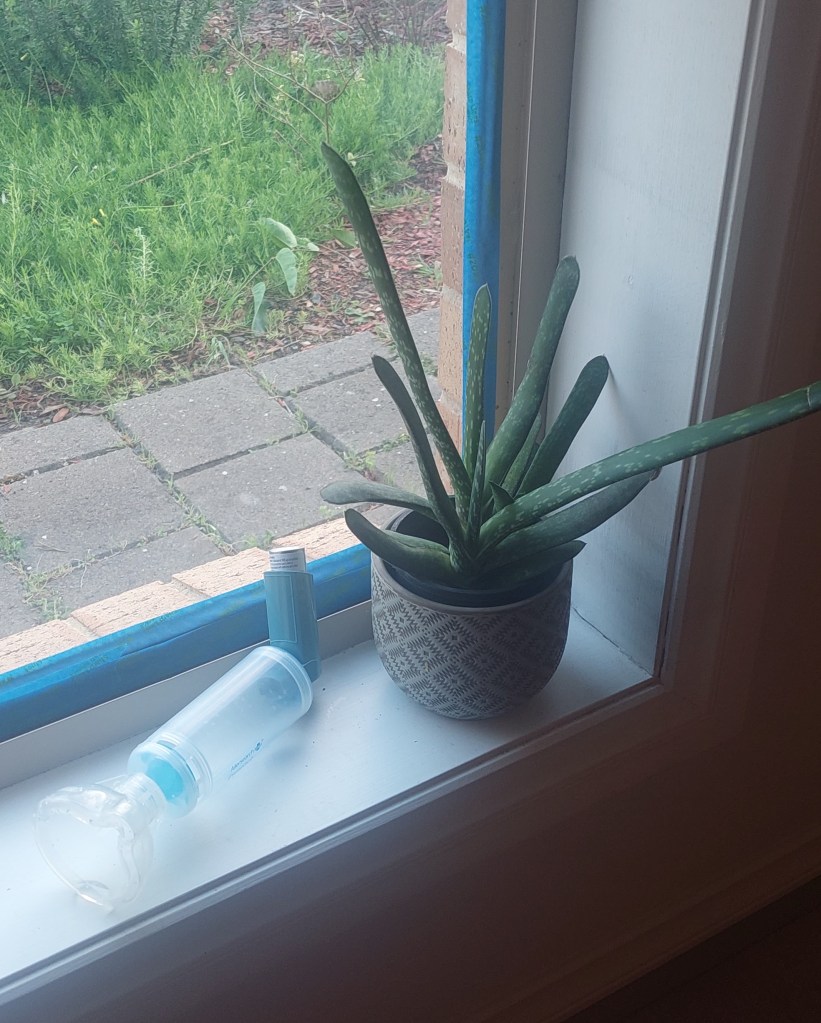
And while we cough and puff, and the summer stirs, it’s challenging to know just how to wrestle this algal beast and the havoc it’s wreaking on the ocean ecology, our lifestyles, cultural practices, health and livelihoods.
The impacts are unending, or so it seems, as dead fish flop where children should play, and fisher boats turn back all empty and grey.
How to make sense of it all? What’s the meaning in this marine madness? Where is our direction when the winds are constantly changing?
It’s easy to feel adrift in this sea of uncertainty, but can we finally turn around our disorientation and despair by making meaning and finding purpose in this algal agony?
What happens if we direct our focus and energy towards constructive and better things in spite of all the hurting and the harm?
Perhaps it’s what blooms out of our gloom that carries us through.
Many may do it tough as tourists turn away, and here’s the real challenge – to find that bloom in any algal gloom.
But with collective spirit, could we build our best resilience and purpose when we are a community in crisis and in need of care?
Emotion Focused Coping
This doesn’t mean that we just “think positive” and skip over the bad stuff.
In fact, it’s important that we first recognise the reality of just how hard or Not-Normal the situation actually is.
As part of dealing with the hurting and the hardship, we need to give ourselves plenty of time and space to feel all the difficult parts.
Perhaps some extra quiet time alone or sharing with a trusted other. Psychologists call this emotion focused coping.
We can acknowledge that all of our feelings – fear, deep sadness, anger, despair, confusion etc. – are valid, normal and understandable at this time.
It may even mean accepting that for some people, these feelings are big and ever present, while for others, the algal crisis is barely visible at all.
Our feelings may come and go in waves, just like the foam. Or contract and expand over the weeks and months, just like the algae.
Like our physical reactions to this bloom, we will likely need to feel the discomfort of our feelings in our bodies, with our hearts, our muscles, our breath and, with our salty tears.
Meaning Making Coping
If we do this, then maybe it’s possible to slowly, slowly find ways to discover how this crisis can drive us towards the better things – the things that matter to us most – such as active improvement of our environment, climate and communities.
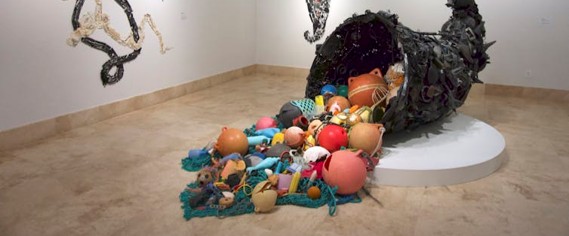
Like those who have found refuge in making art from beach-combed plastic, we can find direction and purpose in spite of the bad stuff, and maybe even discover a sense of belonging, as well as a connection to something greater than ourselves.
EXAMPLES OF MEANING MAKING
Strengthening Directions:
We can ask ourselves: Even though we are in this algal crisis, what bigger good aims or purpose can we work towards?
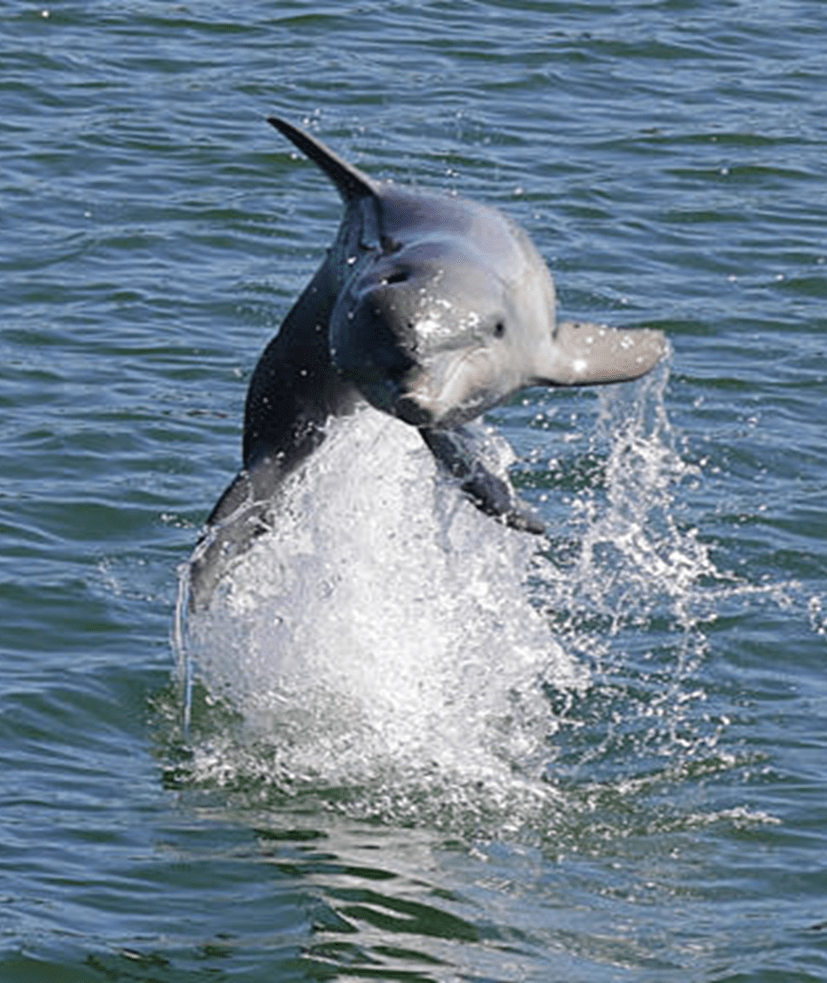
A recent example is where the tragic death of one of the Port Adelaide dolphins (Rocket) has led many community members to fight for increased protection for dolphin safety. Fighting for dolphin safety is the positive direction, a new constructive community focus that has come out of a devastating event – the death of a much-loved dolphin. Others in the community have taken up a range of positive coastal restoration or climate-related causes.
Creating New Projects
We can ask ourselves: What realistic and achievable goals/ projects can I set myself, or get involved with within my community?
A recent example of this is the Toxic Surf project that has involved many artists and other community members coming together to create a range of art and cultural productions and events. These aim to honour the vast number of precious marine life that has been lost, as well as to support the community in their grief and mental health around the algal bloom crisis. Others are currently working to find practical alternatives for recreational activities for youth and sports clubs. Still others are developing creative solutions to help tourism and impacted local businesses.

Learning New Lessons
We can ask ourselves: In spite of all the bad things happening during the bloom, how are were growing or what are we learning through this crisis?
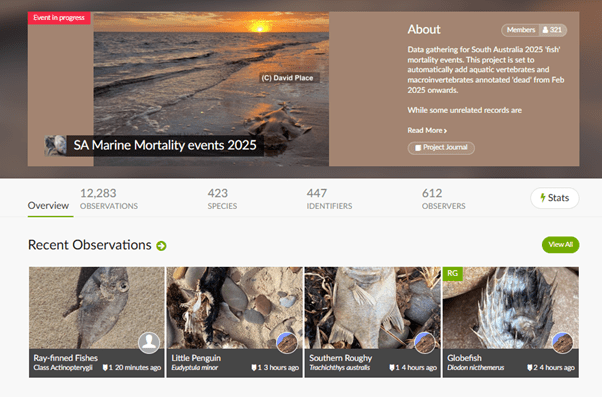
An example of this is the people who are learning by documenting and categorising marine life through the Citizen’s Science Project. Many are learning interesting facts about certain species of fish. And some individuals, including scientists, are using the collective data to learn more about ocean science complexities. Hopefully this will lead to better ability to predict marine patterns and protect marine habitat in the future.
Discovering New Roles
We can ask ourselves: Who am I being or becoming or what role can I play during this crisis?
Every Role Matters. Small roles play an important part in a bigger whole, so be involved in the way that you can, to the level that you can. Even though you may be hurting or in hardship, if you can, stand tall in whatever part you can play. If you can wear your role with pride, it can ease the sense of stress during the bloom.
Examples of roles that people are adopting:
- Educating others (staying informed and providing others with useful information)
- The Positive Vibe Generator (posting funny things, telling ‘black humour’ jokes about the situation)
- Sharing Poems or Songs (many artists have begun posting material online and providing the community with other offerings)
- Being a Truth Teller (speaking the facts – relating to the health, financial and cultural impacts)
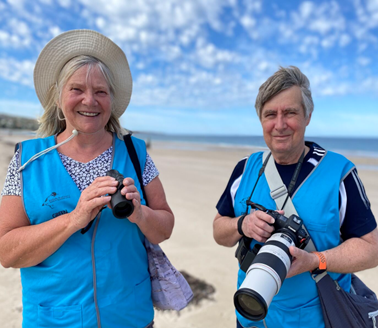
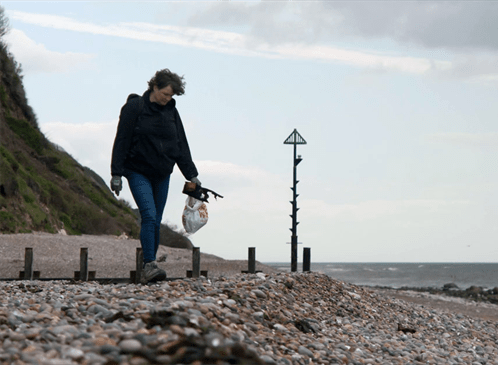
- Assistant Sandwich Maker (providing practical support with the coastal clean ups or revegetation days)
- Being an Empath (listening to and supporting others who are experiencing challenges)
- Safe Space Policing (calling out online judgement and/ or harmful negativity)
- Events Attender (going to coastal care days or vigils or public forums)
- Voice of the People (submitting opinions, responding to Citizen’s Inquiries, attending rallies)
- Change Maker (submitting opinions to Government, writing to politicians, participating in actions for climate change)
- Tourist Tamer (helping round up tourist to support local businesses)
- Being a Nature Ambassador (getting involved in nature conservation and other environmental projects)
- Climate Warrior (fighting against fossil fuels etc)
- Carer (providing practical support and nurturance to others, including children and other vulnerable members of the community)
- An Algal Artist (providing expression and understanding through the arts to what is happening)
- Citizen Scientist (collecting data, offering ideas, conducting research).
- Cultural Leader (Guiding others on important cultural facts and information)

Finding New Possibilities
We can ask ourselves: Are there new opportunities or possibilities that can arise out of this situation that wouldn’t have otherwise existed?
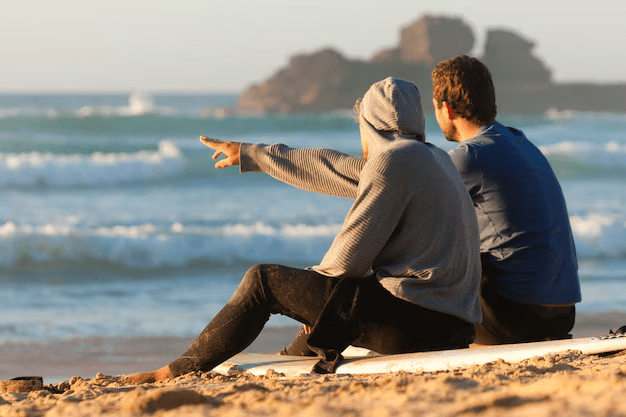
An example of this is that some surfers have become involved in groups and events aimed at connecting surfers together during the crisis, such as Climate Surf Cafe’s, a series of online sharing groups. Some surfers are finding this has been a good opportunity to chat with others more deeply than they would usually. Some feel less alone and are benefiting from discussing issues that they care about, such as climate change and mental health.
HOW TO CULTIVATE AND DISCOVER MEANING
Meaning is something that we discover as we go about interacting with other people and the world around us.
- Try thinking about what skills you already have or would like to develop. What are your values? What’s important to you?
- Talk to others and be on the lookout for what’s needed in the community at the moment.
- Join groups or discuss with others in your local community groups about what roles each person can take during this time.
- Exchange stories, listen, reflect and realise that finding a meaningful role and/ or a sense of purpose during the algal bloom may take time, with trial and error. But keep going and stay involved!
The Take Home Message
And so, without trivialising the very real hardship, it’s important that we challenge ourselves to find new directions and roles.
It’s possible that we will need to do stuff, and to be stuff, that we would have never dreamed of doing and being, if this crisis hadn’t occurred.
Many of us are already heavily burdened and just scrambling to manage day-to-day. This makes it really tricky to find the time, energy and other resources to stretch ourselves beyond our Old Ordinary and to make all the adjustments we may need to make during this time.
But if, bit-by-bit, we can embrace this tough New Normal we do not know just what we’ll discover about who we are as individuals, and what we’re capable of as a community,
Let’s bring purpose and meaning as we journey, blind, through this algal alleyway.
And, surely, it’s our collective care for country and community – a shared purpose, rich with meaning – that unifies our vision and unites us all.
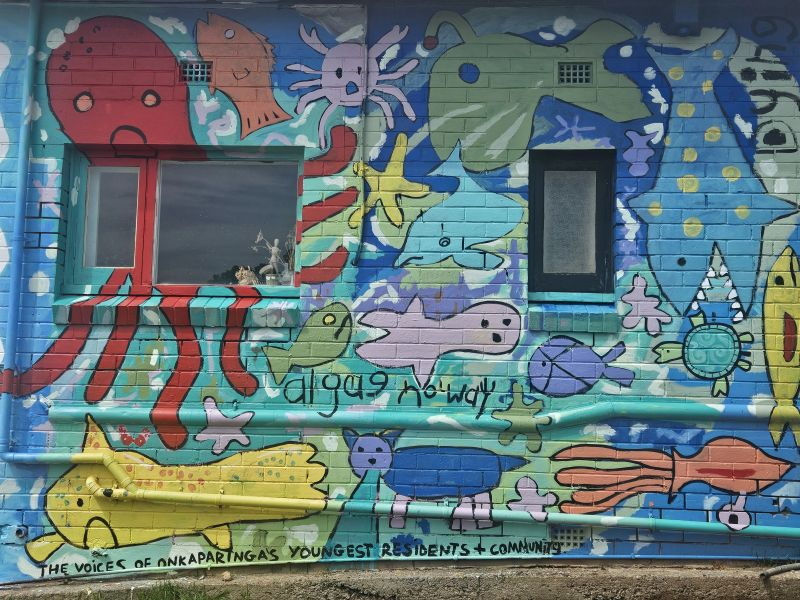
Image of produced by Toxic Surf, created by local/southern school children.
For some inspiration on making meaning through environmental catastrophe:
watch this new video of Dr Jane Goodall.

References:
Drescher, C. F., et al. (2012). Coping with an Ecological Disaster: The Role of Perceived Meaning in Life and Self-Efficacy Following the Gulf Oil Spill, Ecopsychology, Vol 4, No 1.
Hochachka G (2019) On matryoshkas and meaning-making: understanding the plasticity of climate change. Glob Environ Chang 57:101917. https://doi.org/10.1016/j.gloenvcha.2019.05.001
Parks, C. L. (Feb 2016) Meaning Making in the Context of Disasters, Journal of Clinical Psychology.
Park, C. L. & Blake, E. C. (2020). Resilience and Recovery Following Disasters: The Meaning Making Model, Positive Psychological Approaches to Disaster
Pihkala, Panu. 2022. ‘The Process of Eco-Anxiety and Ecological Grief: A Narrative Review and a New Proposal’. Sustainability 14 (24): article number 16628. https://doi.org/10.3390/su142416628.
Reser, J. P., Bradley, G. L., Glendon, A. I., Ellul, M. C., & Callaghan, R. (2012). Public Risk Perceptions,
Understandings, and Responses to Climate Change and Natural Disasters in Australia and Great
Britain.
The Climate Empowerment Handbook (2017). Psychological Strategies to Tackle Climate Change. Australian Psychological Society.
Access more well-being coping info, including eco grief & anxiety resources, and links to positive projects through the Coping and Resources tab at the top of this page.
 Algal Bloom Wellbeing Resources