With the constant reminder of marine and coastal destruction, the bigger and pressing issue of climate change is increasingly at the forefront of many people’s focus and concern.
While it is common to experience a broad range of strong and complex emotions to this situation – from sadness and grief, to fear and worry about the future, as well as frustration and anger at the historic lack of action to prevent climate change.
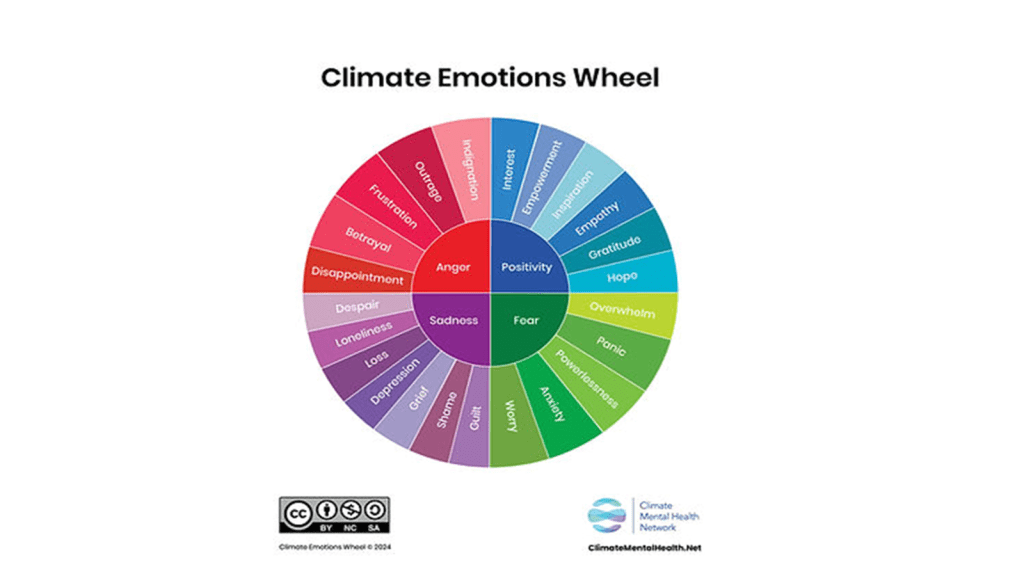
Chart sourced from the Climate Mental Health Network
In Europe this summer, with ongoing climate-related environmental conditions of extreme heat, pervasive fires, drought and crop failures, it is estimated that as much as 15% of the population of some countries are experiencing significant levels of climate-anxiety. Other research is showing that approximately 80% of Europeans have changed their holiday plans due to climate related factors.
It seems reasonable to assume that should the algal bloom continue to substantially impact South Australian metropolitan beaches, recreation habits, travel and general life-style factors over the summer, that South Australia could be facing a similar population prevalence of climate distress.
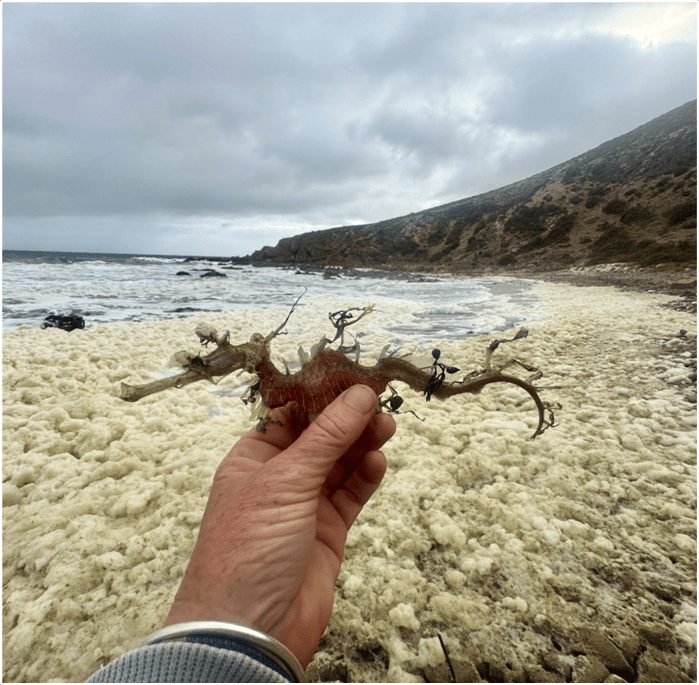
You are not alone if you are feeling impacted by these climate concerns. Many feelings are normal and valid.
Here is a way of conceptualising some common experiences when it comes to climate distress.
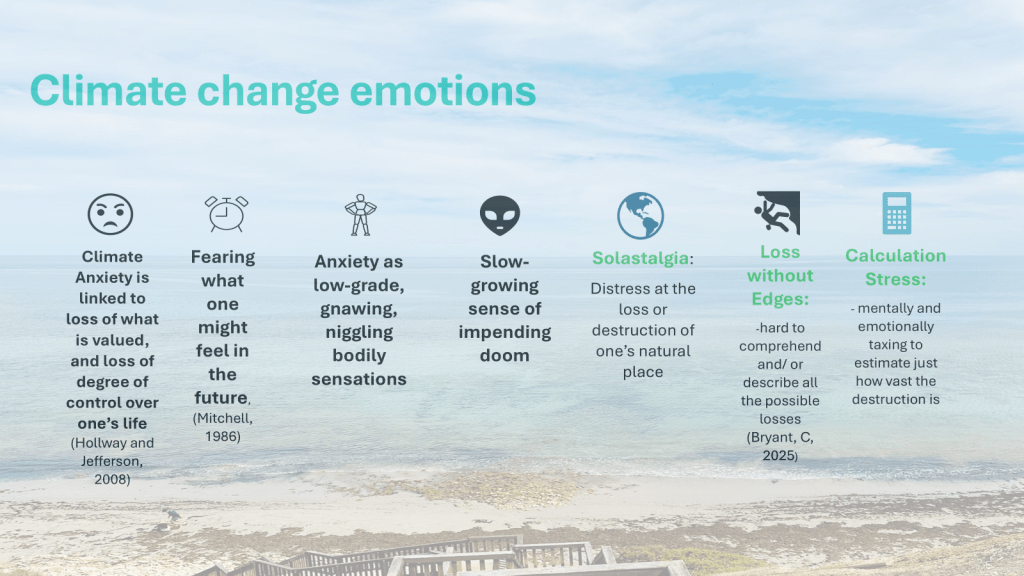
RESOURCES FOR MANAGING CLIMATE RELATED DISTRESS
- How to Work with Eco Anxiety and Climate Grief (Podcast)
- Wild Podcaster. Climate Educator. Renegade (also on Spotify)
Get Involved: Carbon Reducing Action
•Dontate to help experts provide on-the-ground strategic advice to reduce carbon (to organisations and businesses) (e.g, through the Climate Council)
•
•Personally Reduce, Re-use, Recycle, Revegetate (info through Your Home)
•
•Call on Government to set stronger targets and, now, a specific target of how to meet these targets (e.g. through Climate Council)
•
•Sign open petition for Aust to Double rooftop solar by 2030 (through the Climate Council)
•
•Appeal for cleaner transport (e.gl., through the Climate Council)
•
•Support climate campaigns (e.g. through the Conservation Council)
•
•Attend rallies and direct blockades (e.g. through Rising Tide)
•
•Join or support climate focused political parties and/ or candidates
•Volunteer in carbon reducing projects (such as revegetation with Trees for Life or Australian Conservation Foundation)
•
•Offset personal emissions (e.g. Carbon Neutral or Clima)
•
•Encourage your workplace to reduce its emissions (with groups such as Climate Seed or Clima)
•
•Bank, Invest and Gather Super with those who invest in low emissions funds/projects
•
•Increase Public Awareness (e.g Climate Action Now initiative)
 Algal Bloom Wellbeing Resources